How high to hang art
The short answer: hang art so that its centre sits at eye level, 145 cm (57 in) above the floor. When it hangs above a piece of furniture, measure from the furniture instead, and leave 15–25 cm (6–10 in) between its top and the bottom of the frame.
Almost every mistake is the same one: art hung too high. It ends up floating near the ceiling, cut off from the room and from whatever stands beneath it.
Where to put the nail
Choose what the art hangs above and the size you have.
- Nail or hook
- 175 cm (69 in)
- Centre of the art
- 140 cm (55 in)
- Top edge
- 175 cm (69 in)
- Bottom edge
- 105 cm (41 in)
All heights are measured from the floor.
On an open wall
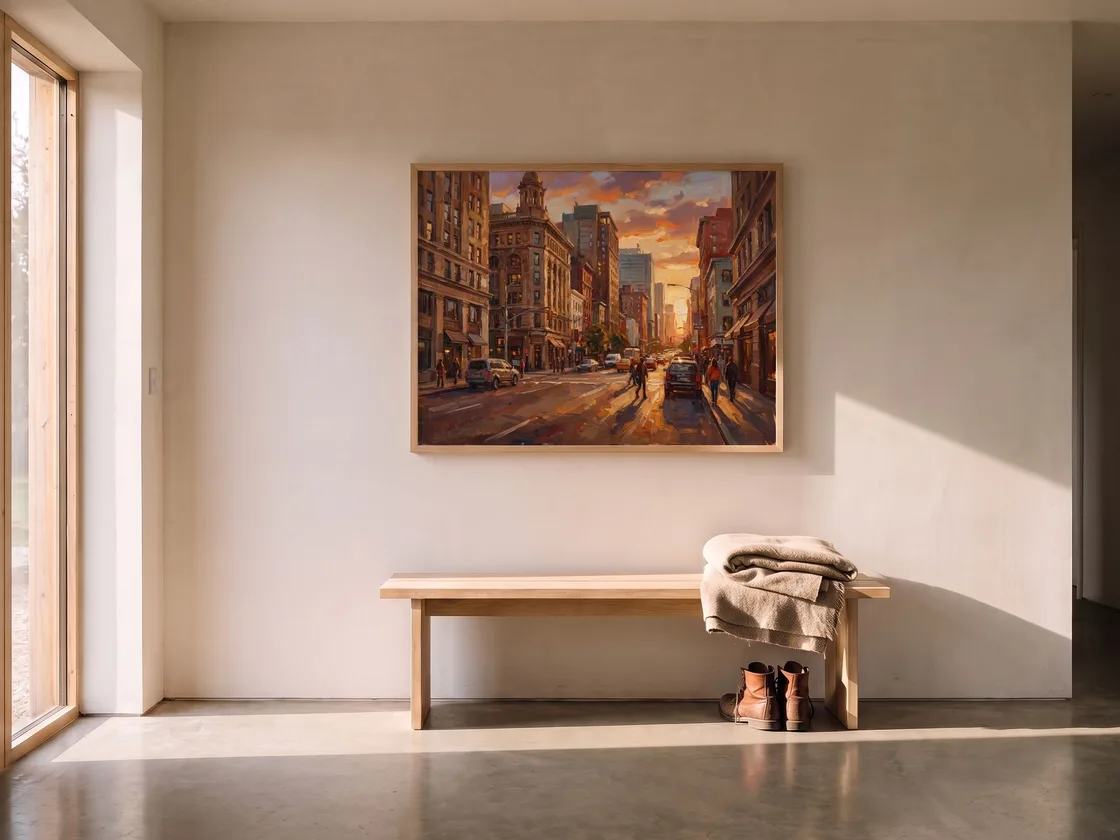
Put the centre of the art at 145 cm (57 in). It is the height galleries hang at, and it works because it measures the centre rather than the top: an A4 print and a 50×70 cm print share the same centre line, so a wall of mixed sizes still reads as level.
The same rule holds in a hallway, above a low bench or a radiator. Low furniture sits too far below to anchor the art, so the art stays at eye level instead of dropping to meet it.
Art above a sofa
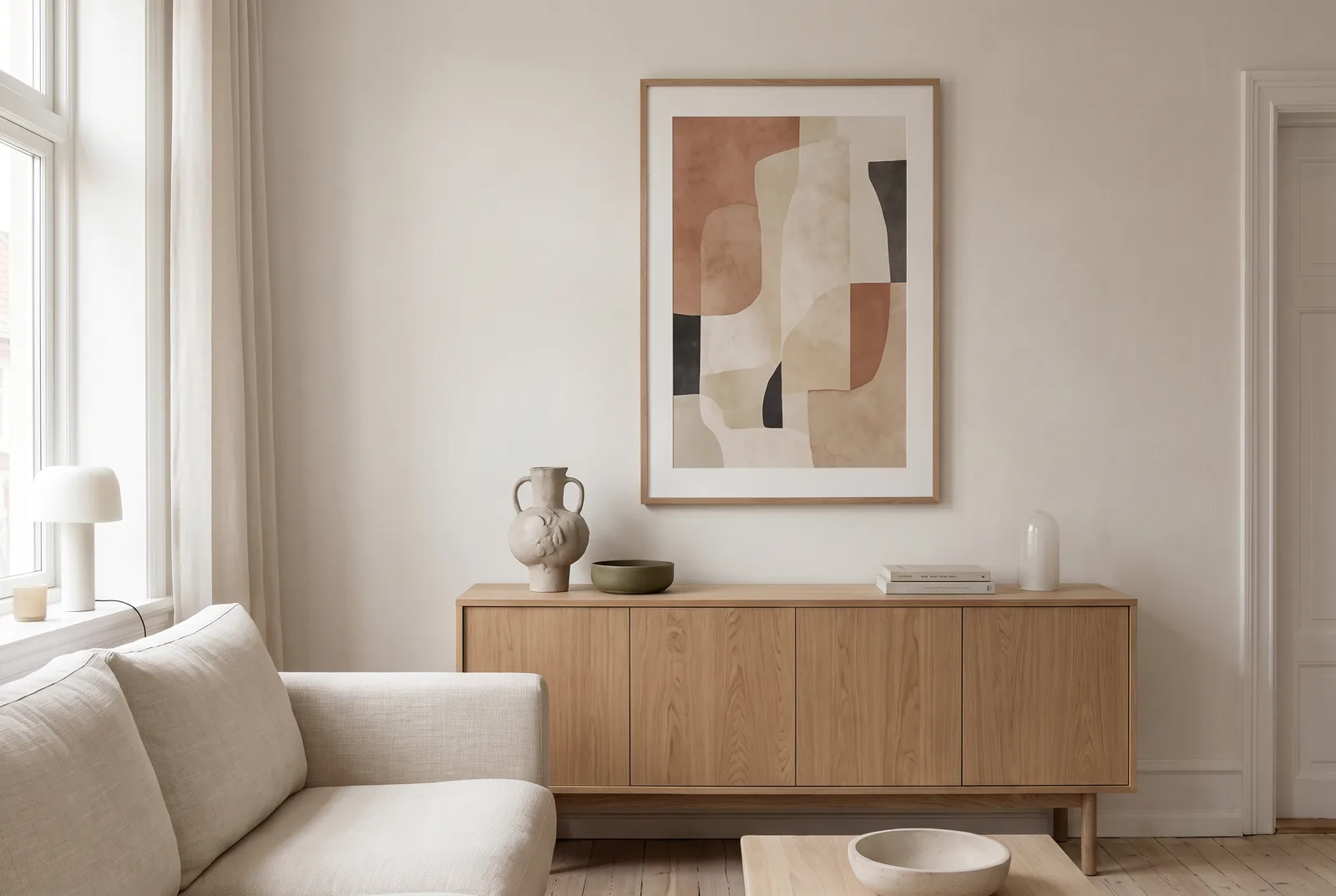
Leave 15–25 cm (6–10 in) between the top of the sofa back and the bottom of the frame. Any closer and the art crowds the heads of the people sitting there; much further and the sofa and the art stop reading as one group. The same goes for a couch of any shape: measure from its highest point.
Width matters as much as height. Aim for art about two-thirds the width of the sofa — for a 200 cm (79 in) sofa, around 120–150 cm (47–59 in). Our largest print is 70×50 cm, so above a wide sofa hang two side by side: two 70×50 prints with 8 cm (3 in) between them span 148 cm (58 in). Every room photo gives you three suggestions, made from the same room and the same choices, so any two of them sit well together as a pair.
Hang a pair as if it were one piece: their shared centre goes where a single piece's centre would, with the tops and bottoms lined up.
Art above a bed
The same rule as a sofa, measured from the top of the headboard: 15–25 cm (6–10 in), or up to 30 cm (12 in) above a low headboard. Without a headboard, measure from the top of the pillows as they stand against the wall.
Centre the art on the bed, not on the wall. For a 180 cm (71 in) bed, the two-thirds rule asks for art about 120 cm (47 in) wide — again a job for a pair rather than a single print.
Above a sideboard, dresser or table against the wall
Treat it like a sofa: 15–25 cm (6–10 in) above the top. If a lamp or a vase stands in front, the art can rise a little to clear it, but not so far that it loses touch with the furniture.
Above a dining table
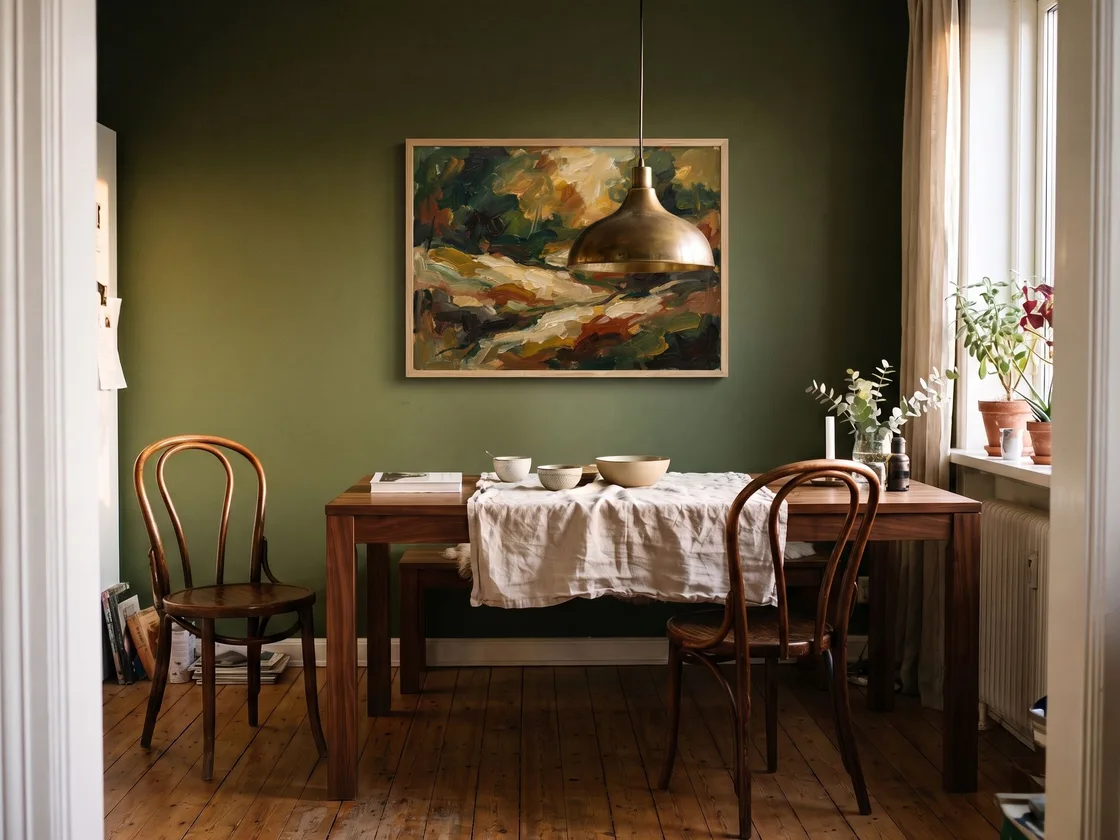
A dining table stands away from the wall, so the open-wall rule applies: centre at 145 cm (57 in). If the room is used mostly seated, you can bring it down by 5–10 cm (2–4 in) — as long as it stays clear of the chair backs.
Tall ceilings
Keep the centre at eye level whether the ceiling is 2.4 m (8 ft), 2.7 m (9 ft) or higher. The instinct in a tall room is to hang higher to fill the wall, but that only lifts the art out of view. Fill a tall wall with a larger print, or a pair, instead.
Before you drill
Mark the outline on the wall with painter's tape, step back to the doorway and live with it for a day. Then use the calculator above: the nail goes at the top edge, minus the distance from the top of the frame down to its hook or wire.